
Most Aussies sit down at a poker table expecting a fair go, but Caribbean Stud rewards discipline far more than luck on any single hand. When you treat the game like a regulated service operation rather than a quick thrill, the maths starts to line up with your own bankroll limits. I have spent two decades building customer-facing teams across multiple time zones, and the same principles that keep a multilingual support desk from buckling under a spike in volume apply here: clear rules, consistent pacing, and a hard stop before the session runs hot. You can find a practical breakdown of caribbean stud poker strategy at skycrowncasion.com if you want to compare house edges before you commit any chips.
That mindset shift is exactly what separates casual players from those who actually protect their funds over time. If you want to explore how structured play and transparent payout rules can keep your bankroll on track, you can review the game breakdowns and responsible play guides at skycrowncasion.com.
Reading the Dealer’s Up-Card Without Overcommitting

The five-card hand you are dealt sets the tone, but the dealer’s single up-card is where most casual players misjudge their edge. If that visible card is a nine or lower, folding is often the only sensible move unless your own hand has already formed a pair or better. I once ran a regulated contact centre where agents had to escalate every query that crossed a specific risk threshold, and the discipline is identical here: you do not chase marginal hands just because the table feels quiet. Each spin, roll and deal is independent of the last, so a cold run does not justify raising your ante out of frustration. When the dealer shows a jack through queen, you can widen your raising range slightly, but you still need at least a pair or a strong draw to justify staying in. Hobart players who prefer a slower, measured pace tend to do better here, because the game punishes impulsive raises far more than it rewards them. A solid caribbean stud poker strategy always starts with folding discipline, not with hoping the next card fixes a weak hand.
| Detail | Note |
|---|---|
| House edge | Typically around 5.2% with basic play |
| Best raise threshold | Pair or higher against a weak up-card |
| Session pacing | Fixed stop-loss before the arvo crowd arrives |
| Independent outcomes | Every deal resets the odds cleanly |
Bankroll, Pace and the Payment Flow That Keeps You in the Game
Money management matters as much as the cards you hold, and the cashier flow you choose can quietly dictate how long you stay at the table. I have watched regulated payment operations in Southeast Asia scale from a single counter to thousands of daily transactions, and the lesson is consistent: transparent limits and predictable processing beat flashy bonuses every time. Poipet on the Thai-Cambodian border is a cluster of casinos that learned this the hard way when bonus mechanics outran their verification capacity, and Australian operators have largely taken the opposite approach since. You want a platform that treats deposits and withdrawals like a measured pipeline, not a sprint, with clear currency display and reasonable processing windows. Money Honey enabled automatic payouts of up to 500 coins, which sounds generous until you realise that speed without limits just encourages overplay. Harrison Campbell, Payments Strategy Director, Sunburnt Country Interactive, put it plainly when he noted that “a clean withdrawal path with visible limits keeps players honest about their own session length.” If your bankroll plan includes a fixed stop-loss and a withdrawal trigger, you are far less likely to chase losses when the table turns quiet.
When the Table Turns and How to Walk Away Clean
Even a well-structured session can tilt when the dealer starts catching lucky up-cards and your raises stop paying. That is the moment where a measured caribbean stud poker strategy separates a casual session from a costly one. I have managed multilingual support teams through peak-volume surges, and the rule is always the same: when the queue spikes, you do not throw more staff at it blindly, you reset the workflow and enforce the exit criteria. The same logic applies at the felt. If you have hit your pre-set loss limit or your win target, walking away is not a failure, it is a controlled handoff. Amelia Taylor, Product Analytics Lead, Southern Cross Gaming Advisory, cautioned that “players who treat a winning streak as a signal to raise stakes usually give back the edge within a few hands.” Henry Henderson, Head of Operator Partnerships, Murray River Gaming Research, added that “clear session boundaries and a visible cashier balance are the simplest tools a player has to avoid overcommitting.” A quiet arvo session with a firm stop point will always outlast a late-night run where you keep telling yourself she’ll be right.
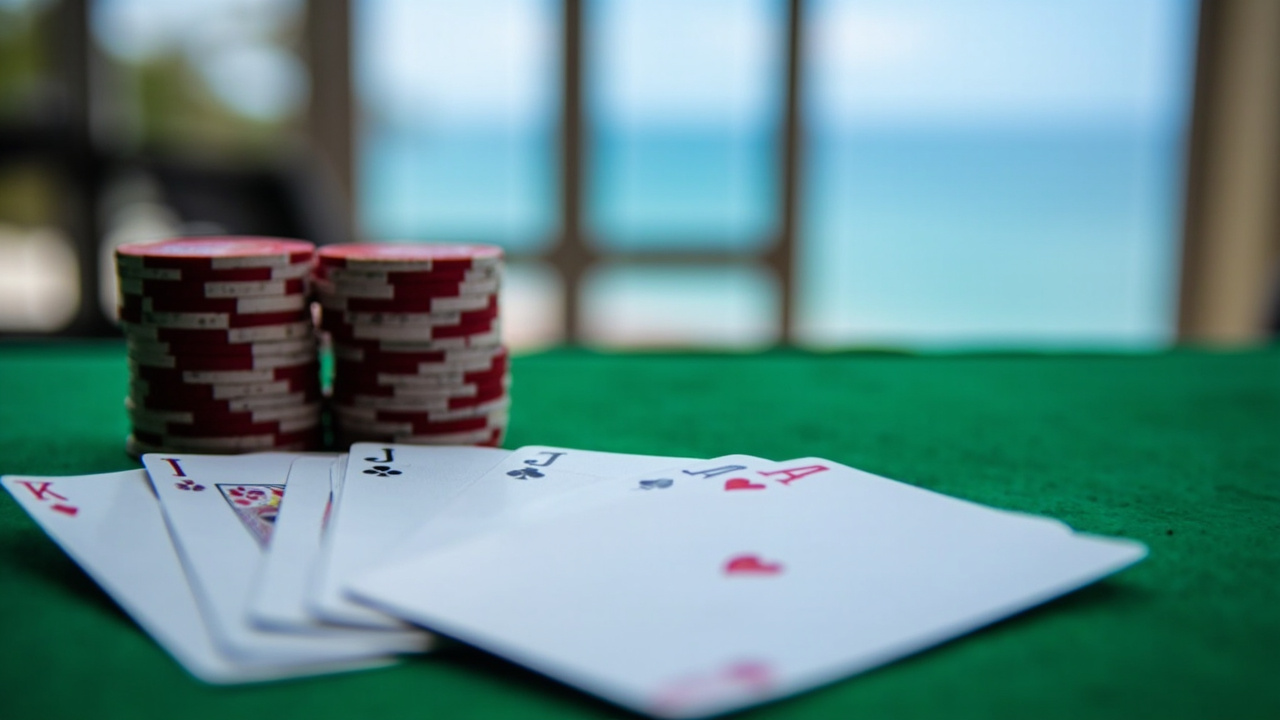
Playing Caribbean Stud well is less about memorising odds tables and more about treating each decision like a controlled service interaction: clear thresholds, consistent pacing, and a firm exit before the session runs away from you. If you keep your raises tied to actual hand strength, respect the independence of every deal, and let your cashier limits do the heavy lifting, you give yourself a fair chance without pretending the house edge has vanished.